Shifting Our Image of the Child: Strength-Based Models for Academic Success and Resiliency

 lbimage_041It’s necessary that we believe that the child is very intelligent, that the child is strong and beautiful and has very ambitious desires and requests.  This is the image of the child that we need to hold.

Malaguzzi, Your Image of the Child: Where Teaching Begins

malaguzziThe Reggio Emilia approach to early childhood education, founded by Loris Malaguzzi in Northern Italy just after World War II, has since gained worldwide acclaim for its child-centred, social constructivist philosophy of teaching and learning. Foundational to the Reggio methodology is the teacher’s Image of the Child as a unique, curious, and capable being, with the ability to co-construct his or her own learning, and full of potential for life-long success.  The BC Early Learning Framework, a guide for early childhood and kindergarten teachers in our province, reinforces the importance of a shared, positive image of the child to “inspire people who interact with children to promote their individual strengths.”  And in the Reggio tradition, this means focusing on the strengths of every child, no matter what learning or behavioural challenges they may experience in their development.

It seems to me that this strengths-based approach to viewing children, which is actively promoted in early learning environments, should be equally reinforced for teachers working with older students, particularly those with special needs or youth who have been identified as ‘at risk’.

A Strengths-Based Model for Students with Learning Disabilities

In BC schools students with significant special needs often require additional supports to enable them to participate in educational programs. In order to receive extra Ministry funding, school districts must identify special needs students based on appropriate categories, including moderate to profound physical or intellectual disabilities, autism, intensive behavior issues, or mental illness.  The documentation and processes involved in identifying students with special needs in these categories is complex and time-consuming, and often challenges school and district-based resource teams to maintain their positive image of the child.

Whenever I participate in school-based resource team meetings, I am struck by the emphasis on negative child images – stories of students who can’t sit still, can’t do work at grade level, can’t read, have written output issues, won’t follow rules, don’t get along with classmates, have low self-esteem or poor social skills. There is little time for stories of success because the value is in painting the worst-case scenario possible for each struggling student.

It’s a Wheel of Fortune game, where consonants (Gs, Hs, Qs, and Rs) not vowels are traded up through a rigorous and onerous system of requests, referrals, and paperwork involving school and district staff, parents, and outside agencies.  The goal of the game is getting kids labeled with designations that come with extra funding, often in the form of additional Educational Assistant (EA) staffing hours. The question then becomes, what is the image of the child who is pulled out of his  classroom to work in the hallway of the school, filling out endless worksheets under the direction of an EA?

juniorcomputer

 Do we still see that child as  a curious, capable, intelligent being, capable of co-constructing his learning when we put him in situations that require him to do more and more of what he struggles with the most? Extra support for our special needs students is a good thing, but a more positive image of the child, one that is grounded in a diversity model, can provide better frameworks and possibilities for success.

148829962657174738_PuRweCuQ_222Thomas Armstrong’s article First, Discover Their Strengths published in the October 2012 issue of Educational Leadership emphasizes the need for educators to shift to a more positive, strengths-based image of children identified with special needs.

Despite our best intentions, we’ve created a system of special education based on deficits. To fashion an environment in which students with special needs can achieve their fullest potential, we need to dig deep into the roots of special education and, at the bedrock level, replace its disability paradigm with a belief system based on diversity (p. 12).

0410NL Neurodiversity layout.indd Armstrong describes a new movement called Neurodiversity that applies the same positive belief system and attitude to differences in human brains that exist in the fields of biodiversity and cultural diversity.   Neurodiversity is based on the belief that there is no “typical” or “normal” brain.  Therefore we need to look at students with special needs not in terms of their deficits, but in terms of their strengths.

“We don’t look at a calla lily and say it has ‘petal deficit disorder; we appreciate its beautiful shape.’”

Unknown

Research in the field of Neurodiversity identifies the strengths of people with special needs.  For example, Armstrong quotes studies demonstrating that…

Students with autism:

  • Appear to do better on tasks focusing on small details within complex patterns
  • Tend to be systemizers who have a fascination with logical structures
  • Often score high on highly figural tests

Students with dyslexia:

  • Often demonstrate superior artistic abilities
  • Can identify complex 3D objects
  • Often show higher than average entrepreneurial ability

Students with ADHD

  • Have a tendency to seek novelty, a prerequisite for creative behavior

And the list goes on.  Armstrong’s point is that by building “strength awareness” for our special needs students we can then begin to construct the “best ecological niches” for them– learning environments that reflect their strengths and in which they can thrive.

Armstrong offers seven practical components for building positive learning environments for special needs students:

  1. Strength Awareness – putting more time and energy into detailing students’ positive attributes (rather than assessing their deficits) using research, strengths inventories, portfolios, file reviews, interviews
  2.  Positive Role Models – highlighting famous neurodiverse people as “heroes with special needs”
  3. Universal Design for Learning –curriculum design that acknowledges diversity and removes barriers to learning (e.g. assistive technology)
  4. Strengths-Based Learning Strategies – differentiated learning tailored to individual needs
  5. Enhanced Human Resources – enriching human support systems for students by strengthening positive relationships with adults and peers
  6. Affirmative Career Aspirations – constructing positive self-images and expectations for success as adults through career awareness initiatives
  7. Environmental Modifications – equipment or room set up that reduces challenges for students (earplugs, weighted vests, quiet rooms)

Recognizing Strengths and Talents in At Risk Youth

resiliency

This same philosophy can also be extended to students at risk.  In Turning it Around for All Youth: From Risk to Resilience Bonnie Benard emphasizes the need to shift away from viewing children “through a deficit lens” that focuses on social issues, at risk behaviours and academic failure.  While social science research has successfully identified many of the problems that put students at risk (poverty, substance abuse, family dysfunction, etc.), and we have been able to get more services to children and families by identifying these issues, Benard points out that the process has also led to stereotyping, tracking, lowered expectations, prejudice and discrimination.  It has prevented us from developing a positive image of the these students:

“Looking at children and families through a deficit lens obscures a recognition of their capacities and strengths, as well as their individuality and uniqueness” (p. 1).

Benard cites research on resilience that disproves the deficit model and recommends practices and attitudes that promote healthy development and success for students at risk. The starting point is the positive belief among adults working with at-risk youth that all students have the potential for developing resilience. Specific considerations for this model include:

  • Caring relationships between adults and students
  • Positive, high expectations for all students
  • School-community collaborations
  • Growth opportunities for students

HoldingHands-OP

Nelson and Eckstein (2008) propose A Service-Learning Model for At-Risk Adolescents that expands on Benard’s school-community connections and reflects many of the core principles of Project-Based Learning. In a service-learning model students and educators collaborate in creating learning opportunities that encourage “optimum student engagement in the community, in the educational process, and in self-discovery” (p.224).  Service learning is “possibility focused rather than problem focused” (p.227), providing students with opportunities to engage in positive ways with the community in environmental initiatives, social justice campaigns, and civic responsibility projects.

drainThis type of learning that extends beyond the classroom helps students build the “developmental assets” that can lead to more positive decision making and pro-social behaviours.  A service-learning model can also contribute to improved academic achievement:

“Current research suggested that students who are involved in service-learning were more likely than students not participating in service-learning to make higher test scores and be more engaged in learning” (p.226)

Shifting from a deficit-based image of the child to one that is strength-based, enables educators to create positive learning environments and opportunities that honour diversity and recognize students’ unique skills and talents.

imagetest1

It is this positive image of the child that we need to hold in order to help our most vulnerable students overcome their challenges, experience success, and develop resilience.

Armstrong, T. (2012). First, discover their strengths. Educational Leadership, 70(2), 10-16.

Benard, B. (1997). Turning it around for all youth: From risk to resilience. ERIC Digest. Retrieved March 15, 2013, from: http://resilnet.uiuc.edu/library/dig126.html

Malaguzzi, L. (1993). Your image of the child: Where teaching begins.  Translation of a seminar presented in June 1993.  Retrieved March 15, 2013 from: http://www.reggioalliance.org/downloads/malaguzzi:ccie:1994.pdf

Nelson, J. & Eckstein, D. (2008). A service-learning model for at-risk adolescents. Education and Treatment of Children, 31(2), 223-237

Reflections on Designs 2013: Exploring Project-Based Learning

images

“Teachers are designers.  An essential act of our profession is the crafting of curriculum and learning experiences to meet specified purposes.”

-Wiggins & McTighe, 2005

Three years ago I worked with a team of instructional leaders from the North Vancouver School District  in developing an after school workshop series for educators called “Designing Curriculum for Deep Learning and Diversity“.  The goal of the series was to introduce teachers to McTigue and Wiggin’s Understanding by Design model that had been gaining momentum across the US and Canada.

41uSdFj3KUL__SL500_AA300_Another major goal for the series was to emphasize the importance of planning for diverse learners, with differentiated  instruction and assessment strategies built into every curriculum, using the Universal Design for Learning framework.

udl_wordle

Interest in the in-service series in 2010 was high, with over 100 people registering and attending a total of five after school sessions in their school teams.  At the first workshop a secondary teacher pointed out that the name of the series was too long. He suggested we consider something shorter that could roll off people’s tongues. At the time we were living the Olympic dream in Vancouver, so everything had a catchy name ending in 2010. “How about Designs 2010?” he suggested. I  agreed and the name stuck.

IMG_0583

Feedback from the Designs 2010 series was very positive. Teachers expressed an  interest in continuing to explore UbD as a model for curriculum design the following year. Designs 2011, developed and facilitated by teacher leaders who attended the  2010 series, offered participants the opportunity to collaborate in grade (elementary) or subject (secondary) specific groups on the development of UbD unit plans. The Designs  2011 series helped deepen educators’ understanding of backward curriculum design and led to the development of several district  UbD planning tools and shared resources.

During job action in 2012  teachers were not able to attend any district-led in-service. I wondered if it would be possible to revive the interest in curriculum design a year later.  In fall 2012, with the strike behind us, and in my new role as Director of Instruction for Learning Services, I began to notice a renewal of interest among teachers in after school in-service. It was time to start planning for Designs 2013…

The growing interest among North Vancouver teachers in the Project-Based Learning (PBL) model was hard to ignore.  A group of administrators had visited High Tech High in the spring of 2012 and had introduced their staff to PBL through photos and stories.  Some schools had even organized their own trips to HTH for their staff members in the fall of 2012.  The wave was catching on, but was still isolated to certain corners of the district.

images-1

At the same time, I was beginning my doctoral research in PBL at one of our schools.   I was interested in following the story of implementation for this group of teachers who had been asked to consider Project-Based Learning as a way of increasing student engagement and academic achievement in a secondary alternative education setting.  In particular, my research was going to focus on professional development support for the successful implementation of PBL.

The choice of Project-Based Learning as a focus for the Designs 2013 series seemed obvious to me given the emergent interest in the field and the direct links to our previous work in UbD.  Yet I still wasn’t convinced that knowledge or understanding of the PBL model had spread far enough in our school district to attract a critical mass of teachers to a three part after-school series.  It took  a strong team of teacher leaders, with a passionate interest in PBL, to develop a framework for the in-service.  In early January we sent out the Designs 2013 Poster.  We were happily surprised when, within a month, over 130 educators registered for the series!

This in-service was truly designed by teachers, for teachers.  Session 1 provided participants with an overview and frameworks for PBL, while sessions 2 and 3 focused on exploring examples and stories of PBL designs from North Vancouver classrooms, and structuring opportunities for teachers  to practise developing and fine-tuning their own PBL designs. Participants left with a list of Project Based Learning Resources that included links to PBL videos, frameworks and templates for planning. Teachers were grateful for the opportunity to do their own background reading online in between sessions.  We also created a Linoit board for participants to post questions and links to other resources.

DSC_0103

The Designs 2013 series wrapped up this week and we are now in the process of gathering feedback from participants.  So far, the reviews have been really positive.  This is extremely satisfying for our leadership team, who worked hard to design an in-service that would be deeply meaningful and impactful for teachers.  But we are still left with the question: “Now what?”

For some reason, we have been successful in getting teachers to participate in the district “Designs” series.  Perhaps it is because the “Designs” brand really has caught on, or because the topic of curriculum design has more universal appeal for teachers than other aspects of teaching (literacy instruction, assessment, etc.)

Nonetheless, we know from research that in order for professional development to be effective and sustainable, district-level workshops are not enough.  Teachers who attended the series need to continue exploring PBL through meaningful, collaborative, and on-going learning opportunities with their colleagues, either at the school level, or through facilitated cross-district sessions.

More importantly, how do we measure the effectiveness over time of this in-service series?  Having participants  answer a few questions in a feedback form will tell us how they liked the workshops, but won’t necessarily provide evidence with respect to a change in practice in classrooms across the school district.  Nor will the feedback from the series provide any evidence of increased student achievement as a result of the implementation of PBL in classrooms.

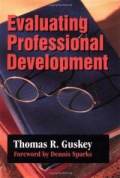
I am reminded of Thomas Guskey’s Five Levels of Professional Development Evaluation and wonder if there is a way for us to dig deeper or reach higher in our evaluation of the Designs series. It’s a good inquiry question for us to grapple with as a leadership team.

evaluating-professional-development-thomas-r-guskey-paperback-cover-art

Guskey-2000-eval-prof-dev-m

Sergiovanni (1995) said, “ Students learn best by doing, and doing is best when it is lifelike – When it involves engagement with real or near real problem solving.”  This is also true for teachers.  They need time and support to work with colleagues on the development of new curriculum design.

graphics1

Like the PBL model itself, effective curriculum design is hard work.  It requires a high level of engagement in problem solving, creativity, and collaboration with peers.   Above all, it requires support over time in order to be sustainable.

The best school systems in the world are now investing in professional development for teachers that enables them to collaborate on curriculum design.  In Finland teachers have opportunities to engage in joint curriculum planning and approve school-level curriculum.  “The importance of curriculum design in teacher practice has helped shift the focus of professional development from fragmented inservice training toward more systemic, theoretically grounded, school-wide improvement efforts” (Darling-Hammond & Rothman, 2011). 

Many of the participants in the Designs 2013 series are already asking for this kind of investment and support from the school district in implementing more inquiry and project-based designs for learning.

It behooves us to find a way to make it happen.

Darling-Hammond, L. & Rothman, R. (2011). Teacher and Leader Effectiveness in High Performing Education Systems. SCOPE.

Guskey, T. R. (2000). Evaluating Professional Development, Corwin Press.

Sergiovanni, T. (1995).  The principalship:  A reflective practice perspective, Allyn & Bacon.

Wiggins, G. & McTigue, J. (2005). Understanding by Design. ASCD.

Exploring an Archeology of Ideas in Project-Based Learning

Today everyone is talking about Project-Based Learning as a ‘new’, 21st Century approach to teaching and learning.  But is the use of projects in teaching all that new? Not really…

Back in 1918 William H. Kilpatrick published “The Project Method” Child-Centeredness in Progressive Education” in The Teachers’ College Record.  In this now famous essay Kilpatrick proposes “wholehearted purposeful activity in a social situation as the typical unit of school procedure” in order to utilize “the child’s native capacities now too frequently wasted.”

Kilpatrick2

William H. Kilpatrick

It’s fair to say that lots of teachers today use projects in their classrooms, so does that mean they are all doing project-based learning?  Not according to John Larmer and John Mergendoller who wrote a fabulous article in 2010 called: “The Main Course, Not Dessert: How are Students Reaching 21st Century Goals with 21st Century Project-Based Learning?” Larmer and Mergendoller point out that most teachers today still view projects as “dessert” – lightweight, fun activities (e.g. posters, skits, models) served up to students after they have learned the course material through more traditional methods such as lectures, textbook readings, worksheets, etc.  By contrast, in project-based learning (PBL), the project is “the main course”.  It is central rather than peripheral to the curriculum.

So what do we really mean when we talk about Project-Based Learning?  Based on my research, here are some of the characteristics of PBL defined by the experts…

teaching_box

Project-based learning (or PBL):

  • Is a comprehensive instructional approach
  • Uses principles of backward curriculum design
  • Frames learning in long-term units of study rather than short-term, isolated lessons
  • Organizes learning using two critical components:1) Driving Questions and 2) the production of Projects (artifacts) that address the driving question and represent student learning
  • Focuses on authentic, important real-world issues that capture learners’ interests and provoke critical thinking and reflection
  • Engages students in sustained, collaborative inquiry
  • Fosters collaboration (between students and between students and teachers) in designing projects
  • Develops important skills including: critical thinking, research, communication, collaboration, problem solving, and leadership.
  • Aligns assessment with projects – high interest tasks or performances that mirror the type of work professionals do in the community
  • Ensures that all learning culminates in a publicly exhibited product, publication, or presentation (developing a model, invention or business proposal; performing a play; writing a newspaper article; producing a video) – there is purpose and an audience connected to every project so that students recognize the relevancy and authenticity of their learning
  • Provides a natural link to ‘service-learning’ – students have opportunities to investigate current social/environmental issues and affect change in their community or globally

Project-based learning as we know it today is a complex framework for teaching and learning that has obviously developed over time with thoughtful consideration.

1076132

So where did all these ideas and components for PBL come from…?

For my final assignment in the last course in my EdD program: Seminar in Educational Theory, and my current dissertation research project, I wanted to explore the historical underpinnings of project-based learning.  What I have discovered in researching this topic is that PBL is in fact grounded in the theories of some well-known philosophers and child psychologists.  Here is what my ‘archeological digging’ for ideas came up with…

PBL and Inquiry-Based Learning

socrates1

Socrates

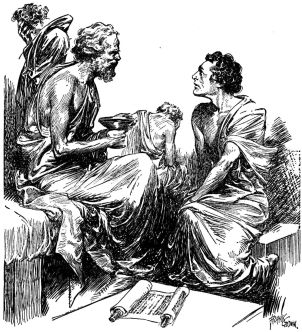
It may be argued that project-based learning owes its philosophical foundations to the Ancient Greek philosophers, and in particular Socrates (469-399 BC) who used a dialectic method of questioning in teaching his students. Socratic inquiry is based on the belief that asking thoughtful questions stimulates meaningful learning. The purpose of Socratic questioning is to prompt and guide students’ thinking, instead of imparting information by direct instruction. It is a teaching approach that is characterized by inquiry, debate, critical thinking, and active dialogue between instructor and student.

socrates_teaching

Project-based learning is grounded in the inquiry-based tradition, both as part of the process of learning and in the creation of projects. Students work in groups asking questions, researching answers, and drawing conclusions, as they work towards the creation of a project that represents their learning. While traditional teaching follows an approach of providing knowledge and concepts to students first, followed by structured opportunities for practice and application of new learning, project-based learning adheres to the principles of backward design, beginning with “the end in mind” – the project.  Project-based learning creates opportunities for students to investigate meaningful questions that require them to gather information and think critically.

221921A key component of the PBL framework is the Driving Question, which helps to initiate the inquiry process and maintain the focus on core learning outcomes and the project itself. Driving questions are open-ended, challenging, and have no one “right” answer. They frame important issues or problems (How can we reduce pollution in the local creek?), debates (Should skateboarders be allowed to ride anywhere in the city?), or challenges (What is the best design for a high school?).  Driving questions sustain further inquiry, deepen students’ learning, and ultimately lead to the creation of an original project.

For an interesting article on driving questions check out Andrew Miller’s 2011 article: “How to Refine Driving Questions for Effective Project-Based Learning”.

PBL and Experiential Learning

Experiential learning emphasizes the central role that experience plays in the learning process.  The idea of learning by doing and empirical accounts of knowledge can be traced as far back as John Locke (1632-1704) who in the 17th century advanced the idea that all reason and knowledge are derived from experience.

170px-Locke-John-LOC

John Locke

In Some Thoughts Concerning Education, originally published in 1693, Locke advanced several principles of instruction that included the notion that children learn better by practice and doing, particularly when their work is linked to their personal interests. Sounds a lot like current descriptions of project-based learning!

DSC00032

Another experientialist whose philosophy underpins project-based learning is John Dewey (1859-1952), who famously said, “Education is not preparation for life, but is life itself.”

images

John Dewey

Dewey believed that deep learning occurs when students focus their attention, energies, and abilities on solving genuine problems or issues.  For education to be most effective, content must be presented in a manner that allows students to relate the information to prior experiences and to deepen their connection to new knowledge through direct, hands-on experiences. Dewey insisted on the “intimate and necessary relation between the process of actual experience and education” (Experience and Education, p. 28) in order to make learning meaningful for students.  Dewey’s philosophy of learning is central to the PBL model, which is designed to allow students to act, experience, and interact with the curriculum in more direct and meaningful ways.

PBL and Constructivism/Social Constructivism

piaget

Jean Piaget

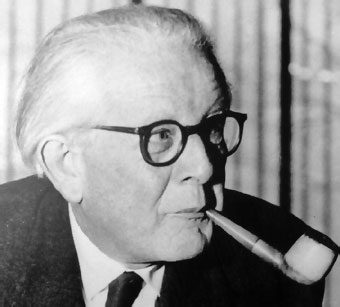
Constructivism was developed in the latter part of the 20th century as an alternative to the behaviorist approaches to education in which learning is viewed through the lens of ‘instruction’, and knowledge is considered to be external, objective reality.  Jean Piaget (1896-1980) is widely acknowledged for his contributions to the theory of constructivism.  Piaget’s theory of human development was based on the hypothesis that learning is a transformative process; children learn by constructing new ideas or concepts based on their current and previous knowledge. Understanding is shaped and reshaped as new knowledge is acquired, especially when new knowledge is incompatible with previous understanding.

art_constructivism_bannerConstructivism views learning as an active process that requires learners to construct their own understanding through engagement in hands-on learning opportunities, followed by opportunities for reflection. In the project-based learning model, students focus on deep exploration of significant issues or problems.  Through an on-going process of knowledge construction and reflection, students design personally meaningful projects that represent and transform their understanding of big ideas connected to the curriculum.

The Russian psychologist Lev Vygotsky (1896–1934) developed a theory of social constructivism based on the idea that learners construct knowledge through interactions with their environment.

44906_full

Vygotsky

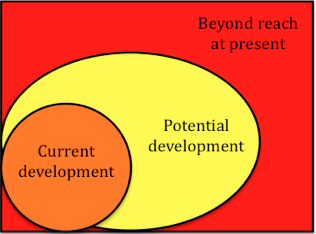
In contrast to Piaget and other constructivists who believed that development always precedes learning, Vygotsky believed that social learning precedes development, particularly when learners are in the presence of more competent ‘others’. His well-known theory of the Zone of Proximal Development (ZPD) is defined as the distance between the actual development level as determined by independent problem solving and the level of potential development as determined through problem solving under adult guidance or in collaboration with more capable peers(Mind in Society, 1978, p.86).

screen-shot-2010-10-31-at-13-47-15 In Vygotskian theory, and in the project-based learning model, the starting point for instruction is the learner’s current knowledge and skills. The learner brings prior knowledge and experience to the learning task, which can be applied to solve problems and develop new understanding. Project-based learning reflects a Vygotskian perspective by prioritizing social interactions that allow learners to “face cognitive challenges that are just slightly above their current levels of ability” (Wrigley, 1998, p.2).

In PBL classrooms students have opportunities to work in cooperative groups entering into “discussion and meaningful interaction with more capable peers or teachers. These individuals can model problem solving, assist in finding solutions, monitor progress, and evaluate success.

Paolo Freire (1921-1997),a Brazilian educator and political activist, is also considered a significant contributor to the field of social constructivism.

freire

Paolo Freire

Like other constructivists, Freire viewed knowledge not as something static that is transmitted from teacher to learner (the“banking model”), but as something that is socially constructed through meaningful questioning and dialogue. He advocated for a concept of education grounded in problematisation (or problem-posing), a form of critical inquiry. “Only an education of question can trigger, motivate, and reinforce curiosity” (Pedagogy of the Heart, 2004, p. 31). Freire’s work focused on making education a meaningful and liberating process, particularly for disadvantaged children in Brazil, by focusing on critical thinking, and the development of identity, democratic participation, and cooperation. Freire considered the traditional “banking” concept of education “as an instrument of oppression” (Freire, 1970) and advocated instead for learning that focused on problem-posing and dialogue, one that would ultimately lead to critical consciousness (conscientizaçào) – “the ability among students to perceive social, political, and economic contradictions, and to take action against the oppressive elements of reality” (Pedagogy of the Oppressed, p. 17).

0826412769.01.LZZZZZZZAction and reflection (praxis) were important in Freire’s work and are particularly relevant, important concepts to consider in a project-based learning model.

PBL and Constructionism

 The Constructionist epistemology builds on both the experiential and constructivist theories of learning to view learning as a reconstruction rather than a transmission of knowledge. Seymour Papert (born 1928) initially proposed the theory of constructionism in the late 1980s, through a grant application to the National Science Foundation called Constructionism: A New Opportunity for Elementary Science Education.

Constructionism extends the ideas of experientialism (learning by doing), Piaget’s theory of constructivism (individuals reconstructing new knowledge based on experiences), and Vygotsky’s and Freire’s theories of social constructivism, by asserting that deep, meaningful learning occurs through the creation of an artifact or product of one’s learning.  In 1991 Papert and Harel wrote:

Constructionism–the N word as opposed to the V word–shares constructivism’s connotation of learning as “building knowledge structures” irrespective of the circumstances of the learning. It then adds the idea that this happens especially felicitously in a context where the learner is consciously engaged in constructing a public entity, whether it’s a sand castle on the beach or a theory of the universe. (Situating Constructionism, 1991, p. 1)

150px-PapertTo see what Papert has to say about Project-Based Learning, check out this interview with him on Edutopia.

The idea of students constructing knowledge in the form of an original artifact is the core element in the project-based learning model; moreover, it is what distinguishes project-based learning from other inquiry/constructivist theories such as problem-based learning.  In project-based learning students work cooperatively towards the creation and public exhibition of a tangible, meaningful product (e.g. simulation, game, story, pamphlet, video, play, model, website, etc.) that represents their personal and social construction of meaningful knowledge.

Rooted in inquiry, experientialism, constructivism, social constructivism, and constructionism, project-base project-based learning is a clearly a theory of learning with legitimate, well-defined historical and philosophical roots.

Project-Based Learning Resources Online: 

In researching the topic of project-based learning I have used many resources, some of which are available on the Internet.  Here are my recommendations as a starting point for others interested in learning more about PBL.

Blumenfeld, P.C., Soloway, E., Marx, R.W., Krajcik, J.S., Gusdial, M & Palincsar, A. (1991). Motivating project-based learning: Sustaining the doing, supporting the learning. Educational Psychologist, 26(3 & 4), 369-398 

Buck Institute for Learning – “Dedicated to improving 21st Century teaching and learning throughout the world by creating and disseminating products, practices and knowledge for effective Project Based Learning (PBL).”

PBL

Edutopia – another great website full of  practical ideas for teaching using the PBL approach

Grant, M. (2002). Getting a grip on project-based learning: Theory, cases and recommendations. Meridian, 5(1).

Grant, M. (2011). Learning, beliefs, and products: Students’ perspectives with project-based learning. Interdisciplinary Journal of Problem-Based Learning, 5(2), 37-69.

Houghton Mifflin Project-Based Learning Space

Patton, A. (2012). Work that matters: The teacher’s guide to project-based learningA High Tech High and Learning Futures Project guide. The Paul Hamlyn Foundation.

Scholastic – The Power of Project-Based Learning

Wrigley, H. (1998). Knowledge in action: The promise of project-based learning. Focus on Basics: Connecting Research and Practice, 2(D). National Centre for the Study of Adult Learning and Literacy.

Nature-Based Learning an Important Option for Kindergarten

 “Every day our relationship with nature, or lack of it, influences our lives.  This has always been true.  But in the twenty-first century, our survival – our thrival – will require a transformative framework for that relationship, a reunion of humans with the rest of nature.”

          Richard Louv, The Nature Principle

At the November 2012 Educational Leadership Conference entitled: Partnerships for Personalization: Leading and Transforming Together, I was very fortunate to attend an excellent session on the Sooke School District’s Nature Kindergarten program located at Sangster Elementary School in Colwood, a suburb of Victoria.

small

The program, created in collaboration with post-secondary partners from the area, including Dr. Enid Elliot – an early childhood researcher from Camosun College,  is designed on the model of “Forest Preschools” (“Waldkindergarten”) that have been popular in Germany, Scandinavia, Switzerland, New Zealand and the UK. According to the workshop presenters, the Sooke Nature Kindergarten program is on the “front end of the wave” of nature-based early learning programs in B.C.

Sooke’s program provides children with outdoor instruction every day, rain or shine.  Students have the whole morning to explore natural outdoor settings where they can play, build, observe, and connect with local ecosystems. Afternoons are spent back in a portable classroom with the teacher and ECE instructor, debriefing the morning’s discoveries and making important curriculum connections.

last-child-cover-lrg

In his 2005 book, Last Child in the Wood, Richard Louv coined the term “Nature Deficit Disorder” to describe the behavioral issues resulting from the lack of time children spend outdoors.   Louv blames a number of factors on this disorder, including: restricted access to nature, parental fears, over-scheduled, over-structured sports programs, and the increased time children spend with electronic (TV, video games, cell phones, etc.).

Young parents may be starting to understand this issue better.  Many are looking for meaningful ways to connect their children with nature.  Nature Kindergarten is a popular option in the Sooke school district.  After 18 months of planning and public input, the new program was announced last year.  Over 75 parents camped out for one of the coveted 22 spots in the program.   Next year the school district is anticipating even greater interest in the program and may be considering a lottery system for registration.

And interest in the new Nature Kindergarten has not been limited to local parents.  This innovative program has attracted many Kindergarten and ECE teachers interested in positions on staff, as well as researchers and educators from out of district who wish to observe and study the program.

The Nature Kindergarten program in Sooke has been very successful in its first year in helping a whole new generation of young people develop a deeper appreciation for nature, a more meaningful connection to natural systems, and a greater awareness of the need for environment stewardship.  Another important, and perhaps unexpected, corollary of this unique outdoor learning program is the positive impact it is having on children’s social emotional development.  According to the program representatives, learning outdoors has required that students in the Nature Kindergarten program develop autonomy, empathy, and a sense of kinship not only with nature, but also with their peers.

Unknown

An Ethic of Excellence

Yesterday I received the gift of a wonderful book – An Ethic of Excellence by Ron Berger – from one of our secondary principals.  Although not a new publication, Berger’s book is gaining a lot of attention in our school district, with a few schools purchasing copies for their entire staff to discuss in weekly noon-hour book club sessions.  For me the timing of  this book is remarkable, considering I have just finished historian Diane Ravitch’s rather bleak portrayal of test-based accountability policies and failed educational reforms in the United States.  By contrast, Berger, a veteran American classroom teacher, suggests that the key to educational improvement  is the development of an ethic or culture of excellence in every school.

Berger believes that excellence is born from a culture (whether it is family, community, school) that expects and supports excellence from children.  When children experience a school culture that sets high expectations, that inspires them to care and take pride in their accomplishments, and that values “integrity, respect, responsibility, compassion, and hard work” (p. 7),  they begin to develop an “appetite for excellence” (p.8).  Unlike Ravitch who, even in her concluding chapter, continues to advocate for enriched curriculum, improved assessment practices, and higher standards for teacher training, Berger proposes instead that we focus on “inspirational teaching” (p. 11) that insists on “beautiful, powerful and important work” (p. 29). As I began reading Berger’s book last night, I couldn’t help but reflect on my day and the many cultures of excellence I witnessed.

In the morning I presented a session on curriculum design to a cohort of student teachers  from SFU’s Professional Development Program.  Their faculty advisor is a good friend and former colleague of mine whom I have known for over 20 years.  As a primary classroom teacher Anne was renowned in our community for her ethic of care and excellence with her grade 2 students.  She was an extremely successful teacher who brought out the best in every child by setting high expectations for herself and her students, and by providing thoughtful support and guidance to ensure that each child was successful.  That same ethic of excellence was evident today as I listened to Anne speak with her older group of students – young adults who are just embarking on their careers as classroom teachers.  She expects them to work hard, to strive for excellence in their professional responsibilities, and to take pride in developing inspirational and powerful learning opportunities for their students.  And they know she will be there every step of the way, believing in them, supporting their growth, and ensuring their success as new teachers.

During the afternoon I worked with a wonderful district team of teachers who are helping to design the new Literacy 44 iBook .  It was an intense, engaging, and energetic planning session with a committed group of educators who are working together to create a powerful new online resource for classroom teachers.  This small group embodies  a culture of excellence in the area of literacy instruction.  Their hope is to inspire other teachers  across the school district to contribute to the development of this new iBook resource of best practices for literacy instruction.

Last night I attended my grade 12 son’s Theatre Improvisation night at his school.  He and is fellow drama students have honed their skills within a culture of excellence that has been carefully designed and sustained by their talented theatre teachers.  I watched amazed as the students performed spontaneous improv exercises that required high levels of concentration, collaboration and creativity.  These students were focused, supportive of their peers, and motivated to do their personal best with each performance.  They are accustomed to regular, honest feedback and critique from their peers and their teacher; they know that is the only way they will improve their craft.  These students love the hard work , the high expectations, and the ethic of excellence that have been established within the drama department.   And they know that it starts with inspirational teachers who demonstrate every day what it means to be passionate about your art form, to deliver high quality performances, and to take pride in your work.

There are examples of ethics of excellence all around me in North Vancouver, from secondary schools where committed teams of teachers are collaborating in pods to design cross-disciplinary, project-based learning models that engage students in authentic learning opportunities in their community, to early reading leadership  teams where teachers are using inquiry and action research to better understand and improve literacy instruction for our most vulnerable readers.

Perhaps the secret to remaining optimistic about educational reform is,  as Berger suggests, to continue collecting these beautiful, powerful examples of quality work – narratives and cultures of excellence to marvel at, to admire, and to inspire others.

Reflections on Educational Reforms

“It is the mark of a sentient human being to learn from experience, to pay close attention to how theories work out when put into practice.”                                     (D. Ravitch, The Death and Life of the Great American School System)

Reflections on Chapter One: What I learned About School Reform

My dad was a high school teacher for over 30 years in the small Fraser Valley town where I grew up.  He was one of those no-nonsense Industrial Arts teachers who knew his content well, enjoyed the kids who took shop class, and was generally happy with the status quo of his (old school) teaching practices.  Consequently, he was highly skeptical of new teaching strategies and the false promises made by educational reformists during the 60s, 70s, and 80s.  As a child and teenager I had heard him bemoan the political pendulum swings and pedagogical fads so often, that when I became a teacher myself I swore I would quit the profession before allowing myself to succumb to that kind of cynicism. Generally speaking, I have stayed true to that promise.  But as I read the first few chapters of Diane Ravitch’s book, The Death and Life of the Great American School System (Basic Books, 2010), I cannot help but recognize the many educational changes I have lived through myself during my own teaching career.  The American “infatuation with fads, movements, and reforms” (p.3) has in fact followed a similar path north of the border.

Since I began teaching almost 25 years ago, I have adopted new educational reforms and instructional strategies with unbridled optimism and professional zeal. I championed the ‘communicative approach’ in second language learning, incorporating it into my classroom practices as a teacher in the 80s, and later extolling its virtues to pre-service French teachers as a faculty associate at SFU in the 90s. I embraced with gusto the whole language approach in language arts at the start of my career, but quickly saw the error of my ways when more diagnostic and focused approaches were recommended by researchers and reading specialists.  When the trend in writing instruction went back to a more holistic approach, I ditched spelling tests, dictées, and all worksheets that decontextualized the teaching of writing skills, and discovered the joys of writer’s workshop; I experimented with constructivist, ‘hands-on, minds-on’ approaches to teaching science and math (with some success); and tried out numerous curriculum design strategies.  Each time there has been a new teaching approach or philosophy introduced I, like Ravitch, have “drunk deeply of the elixir that promised a quick fix to intractable problems” (p. 3).  Some approaches became engrained in my practice, others were fleeting and replaced by something new.  But I never lost my optimism or hope.

As a director of instruction in the North Van School District, a major focus for my current work is the implementation of new educational policies, curricular frameworks, and instructional practices.  The ‘in box’ of educational philosophies is constantly full with new initiatives from the Ministry.  In the last decade we have adopted Universal Design for Learning, Differentiated instruction, Assessment For Learning, Understanding by Design, Cooperative Learning, Social Emotional Learning, Self-Regulation, Inquiry-Based, Play-Based, Nature-Based and Problem/Project-Based Learning.  And the list goes on.

Most recently in our province the focus has been on ‘personalizing learning’ for students, part of a reform agenda that Ravitch, an outspoken academic rationalist, would not likely approve of, given her scathing criticism of the “freewheeling reforms” (p. 23) of the 60s and 70s.  Her mockery of A.S. Neill’s Summerhill (an alternative school in Great Britain) illustrates Ravitch’s disdain for non-traditional educational philosophies:

Let students design their own courses and learn whatever they feel like learning whenever (or if ever) they feel like learning.  Get rid of graduation requirements, college entrance requirements, grades, tests, and textbooks.  Down with the canon (p. 23).

For the reader, the description is meant to highlight the radical nature of the progressive reforms and the subsequent “erosion in academic learning” (p. 23) from which Americans were thankfully saved in 1983 by A Nation at Risk, considered by Ravitch to be “the all-time blockbuster of education reports” (p.24).

Interestingly, given our current, local context, Ravitch’s description of Summerhill could easily be mistaken as a critique of the BC Ed Plan, which promises “more choice for students and families with respect to how, when and where learning takes place” and the opportunity for students to “play an active role in designing their own education”.  Granted, there are many elements of the BC Ed Plan that Ravitch likely would endorse, including the emphasis on “quality teaching and learning” and “high standards”.  While the BC Ed Plan has been criticized by many, one has to admire its attempt to appeal to a wide range of educational orientations, emphasizing personal relevance, choice and flexibility for the more progressive thinkers, while increasing the focus on core curriculum, rigorous standards (for teachers and students), and quality teaching for the traditionalists.   Whether or not the BC Ministry’s new plan for educational reform will achieve all of its proposed changes remains to be seen.  This “royal road to learning” (p. 2) will be played out in the political arena of a provincial election year and another round of bargaining with the BCTF.  Those two factors alone will have a potentially negative effect on its successful implementation.

Nonetheless , I believe there are significantly positive changes embedded in the BC Ed Plan, particularly in the draft Curriculum and Assessment Framework.  A reduction in prescribed learning outcomes will enable the development of a stronger more explicit curriculum in each subject area; greater emphasis core 21st century competencies (communication, critical thinking, creativity, personal and social responsibility) will span across subject areas and promote cross-disciplinary curriculum design; changes to assessment and reporting policies, including exam requirements for graduation, are a positive move to a system that is less accountability-driven and more focused on students’ intellectual and social-emotional development.

After reflecting back on my own career in education, and looking ahead at future changes (as Ravitch has done in the first chapter of her book), I remain hopeful.   The future, as proposed in the BC Ed Plan, promises a significant and positive transformation of our education system.  The rollout of the BC Ed Plan is consistent with what Ravitch refers to as the democratic “gauntlet of checks and balances” required for successful implementation, including time for public review and feedback.  My only caution is that we remain firmly committed to the plan over the long haul.  We need ample time to adjust to the changes, revise the plan according to feedback,  and gain the trust and commitment of all stakeholders, especially teachers, in order to fully implement and sustain the changes.  This new plan is not a short-term fix, but a long-term vision for education in our province.  It cannot be rushed.  As Pasi Sahlberg so wisely notes:

“In this age of immediate results, education requires a different mindset.  Reforming schools is a complex and slow process. To rush this process is to ruin it.  The story of Finland’s educational transformation makes this clear.  Steps must be grounded in research and implemented in collaboration by academics, policy makers, principals, and teachers” (p. 3).

(Pasi Sahlberg, Finnish Lessons)

 Ravitch, D (2010). The death and life of the great American school system: How testing and choice are undermining education. New York: Basic Books

Sahlberg, P. (2011). Finnish lessons: What can the world learn from educational change in Finland? New York: Teachers College Press.

Finding Discursive Meaning in Twitter

The use of language has always been a form of social practice, whether we are communicating with each other face to face, through written text, or virtually in the online world.  Like all social practices, language is also the means by which existing social and political interests are either served or contested.  Twitter, the social networking program that offers an online platform for sending and receiving brief text-based messages, has become a popular form of social and political discourse.  Educational scholars and practitioners from across the globe are now using Twitter to share resources, propose new practices and classroom strategies, and discuss views on educational trends and politics.  The question for me is whether this educational chatter on Twitter can truly be considered meaningful discourse.

Twentieth century French philosopher and postmodernist Michel Foucault, whose work focused on the study of meaningful discourse and knowledge production, would likely have been intrigued by the discursive practice of Twitter.  The imposed brevity of text messages (140 characters), the arbitrary and evolving set of abbreviations (codified language) users have developed, and the ability to create chat lines and direct links to other online information all reflect what Foucault might have called Twitter’s system of representation – the conditions, or rules and practices, in which knowledge is produced, organized, and regulated.

I am a relative newcomer to the Twitter scene.   I created a Twitter account in the spring of 2011 after several colleagues in my school district convinced me that this new form of social media would become an essential networking tool for educators across the globe. I was intrigued and decided to join in.

My first few weeks on Twitter were quite interesting as I learned how the program worked and connected with a few other people locally.  But the novelty of a new electronic communication tool soon wore off.  I began to question the value of Twitter.   It seemed like yet another messaging system to check on a daily basis (after voice mail and endless email messages) with little in the way of meaningful communication.  I felt like I was wasting valuable time slogging through banal messages about the minutia of other people’s personal lives in order to find any gems of educational wisdom.  Tweets like  “Just arrived in San Francisco – can’t wait to start my vacation” or “Barney is pooped after an hour and a half on the trails” (with picture of panting dog) were filling up my ‘inbox’, leaving me with the sense that Twitter had simply become, for many people, a shorthand version of FaceBook.  My own few tweets about events happening in schools and at the district level went into the “Twittersphere” largely unnoticed.   It seemed like a one-way communication system with no possibility for meaningful feedback or true discourse between participants.  By the fall of 2011 I was ready to give up on Twitter.

When I shared my observations and frustrations with ‘veteran’ tweeters from my school district, they nodded knowingly.“That happens a lot with beginner tweeters”, they acknowledged.  “You need to develop a discerning list of people to follow and focus on education-related hash tags to really see the interesting educational discussions happening online through Twitter.”

I followed their advice, researching the “Who’s Who” in Twitter education circles and the most widely subscribed and interesting hash tag twitter feeds.  I followed subscribers whose tweets focused on educational topics of interest to my professional work, and unfollowed others who were cluttering up the airwaves with tweets focused on personal observations or advertising.  I began to research other educational leaders’ personal Twitter lists that lead me to other contacts of interest to follow.  And I discovered Twitter super stars in the field– educational leaders with thousands of followers!  While public organizations, initiatives and officials are often openly criticized on Twitter, the thoughts and opinions of these educational ‘power tweeters’ are routinely retweeted and rarely challenged.   A different twist on what Foucault called social and political domination in discourse?

Despite the advice from colleagues and improvements to my Twitter practice, I continued to find the stream of information overwhelming, unidirectional, and fragmented.  My observation was that tweets were like fleeting ‘sound bites’ that moved outwards from the source and rarely resulted in meaningful and sustained discourse.  In fact, most tweets have a very short lifespan; they live about the same amount of time as a mayfly -30 minutes to one day depending on the popularity of the tweet (or the celebrity status of the tweeter) and how often it is retweeted or favourited!

Foucault believed that the discursive meaning of discreet linguistic events relied on the succession of statements (énoncés) that precede and follow it.  In order to understand language or discourse one has to understand the way in which independent statements relate to one another.  The meaning of any one statement is dependent both on its content and style (intrinsic properties) and its context (external factors).  This is the challenge with Twitter; it is not threaded so the messages all come in the same list.  When a new tweet comes through the system (and they come fast!) you are either reading about someone’s new idea, observation or suggestion, such as a response to an announcement, a link to online information or blog; or you are witnessing a reply to someone else’s tweet.  In the former case there may or may not ever be a direct response to the tweet, and if someone does eventually respond to the original tweet the reply may only show up several tweets later in the list. Thus, the context for the original tweet ‘statement’ gets lost amidst the vast amount of new incoming messages.  In the latter case, a reply to a tweet will typically appear out of context – one has to take the time to follow the @ links to find the original message.  So while the Twitter statements do have both the intrinsic form and extrinsic properties of discourse, finding meaning in them is harder work than in a typical field of discourse.

Recently I have noticed that the Twitter trend has taken over most educational seminars and conferences.  Keynote addresses are now often preceded by a host who informs the audience participants of the hash tag to use in order to create a conference Twitter feed.  In these instances, for people in the audience, and even for tweeters attending the conference virtually, one instantly notices more meaningful connections between Twitter messages. There is also a greater sense of what Foucault called the discursive formation of conditions (context for the conference, direct quotes from the keynote) in which the statements are made.

When I presented a workshop at SFU’s Summer Institute this past July I couldn’t help but notice the number of participants tweeting during my presentation.  Many were brand new Twitter users, so the novelty of the program was compelling and at times distracting.  Nonetheless, after the conference had ended, I did enjoy reading the tweets that had been sent out during my workshop.  I realized for the first time how valuable Twitter could be in terms of the immediacy of feedback for presenters.

Despite my criticisms and questions, I do want to be part of the Twitter community of educators.  I enjoy being a contributor, regularly forwarding to my colleagues links to educational websites, blogs and online articles featuring valuable insights into educational theory and practice.  I am also continuing to develop my skills as a Twitter consumer, learning how to use lists of followers and follow specific chats to find meaning among the massive number of incoming tweets.  And, I have to admit, I really do get a thrill when I check my Twitter account to discover new followers or my own tweets favourited, retweeted or mentioned by others.

Perhaps, the appeal of Twitter lies not only in leaving our verbal traces for the online world to see, but also in the possibility, however remote, of engaging in meaningful discourse with others.  Or maybe it’s just about maximizing the impact and lifespan of our tweets. As Foucault noted:

The game is worthwhile insofar as we don’t know where it will end.”

Project Based Learning – Reflections on High Tech High

We must provide students with improved strategies to help deal with (real world) problems – that is what holds the most promise in our educational system.  

John Barell, Problem Based Learning: The Foundation for the 21st Century 

In January 2012 the North Vancouver School District was pleased to host Larry Rosenstock, CEO and founding principal of High Tech High, a network of eleven K-12 public charter schools in California.  Rosenstock has an impressive resumé.  In the late 1990s he directed the New Urban High School Project, an initiative funded by the U.S. Department of Education aimed at creating a new model for urban American high schools.  As a former carpentry teacher, administrator and attorney, Rosenstock is committed to an educational model that prioritizes personalization of learning, collaboration, and real-world connections.  This model is at the heart of the High Tech High organization of charter schools.

I was very fortunate to work with a team of educators who designed the plan for Larry’s presentation in North Vancouver and then travelled to San Diego in April to tour several High Tech High schools.  Our field trip was an amazing professional development experience and highly successful in terms of the ideas and inspiration we brought home. We were able to speak in depth with staff and students at the schools we visited, observe classes in action, and collectively take hundreds of photos to record examples and artifacts of great teaching and deep learning.

The North Van team was particularly inspired by the emphasis on Project-Based Learning at High Tech High.  All teachers at HTH are firmly committed to this pedagogy.  They work collaboratively in ‘pods’ with their colleagues to design, implement, and reflect on unique, multi-disciplinary projects.  The curriculum design is similar to the Understanding by Design (UbD) framework in that HTH teachers use the principles of backward design, beginning with California State Common Core Standards.  Learning throughout the project is driven by Big Ideas and Essential Questions that have relevance beyond the classroom.  Each project culminates in a product (published writing, art project, 3D model, etc.) or performance (play, debate, speech, musical performance, etc.).

The projects are academically rigorous but also provide relevancy to the students’ personal lives and to the world beyond school.  The collaborative development of these projects goes beyond teachers simply planning together; there are specific stopping points along the way when teachers in the pod are asked to participate in Project Tuning sessions. These sessions follow a specific protocol that includes opportunities for the project designer to describe the projects, present student examples, consider feedback from colleagues, and reflect on the effectiveness of the project’s design.

We noticed a noticeably high level of motivation among the staff at HTH.  Teachers talked about how much they enjoyed the project-based approach to learning and the opportunity (dedicated time) to collaborate with other staff members in curriculum design and action research. Many teachers had taken significant pay cuts to come to HTH from the regular public school system.  They said they work harder now than ever – developing original, project-based curriculum designs, collaborating with colleagues, and reflecting on their practice.  And yet none of them would ever go back to the regular system of prescribed curriculum sequences and teaching in isolation.  Staff turnover is minimal at HTH.  And it’s a competitive, complex process to get hired in the first place.  We were there during a Hiring Bonanza in one of the HTH schools.  The process is a full-day, interactive job interview involving 25 candidates, who interact with staff and students, teach model lessons in real classrooms, and answer questions from a panel of key stakeholders from HTH, including staff and students.

Students are likewise highly motivated and deeply engaged in learning at HTH.  They spoke to us with excitement and pride about the process and culminating products and performances of their learning projects. They appreciate the real-world connections of their assignments and the more collaborative, personalized approach to learning.  They understand that their education at HTH is very different from the public system. They feel a sense of ownership; not only over their own learning, but also over the operation and success of the school they attend– they were very proud to guide us through the schools and could easily articulate the underlying constructivist, project-based philosophy of High Tech High.

The conceptual and physical design of HTH schools is also worth mentioning as an important component in this project-based learning environment.  Consistent with the Reggio Emilia early learning philosophy, the conceptual and physical environment of HTH truly represents the third teacher.  The school’s timetable has been designed to support project-based, inter-disciplinary learning.  Longer blocks of time (90 minutes at secondary) with fluidity in transitions (no bells) and minimal interruptions (no PA system!) help to maximize instructional time in the core subjects.  Sports activities and extracurricular learning take place after school.

The schools have all been built with an open concept in mind; windows rather than walls for classrooms allow students, staff and visitors to observe learning taking place.   When we visited the schools, pedagogical narration/documentation was evident in every school and at every grade level.  The process of learning and the final products of class projects were documented and displayed in the hallways in a professional manner.  In fact, the school had the look and feel of a museum or interpretative centre, with a vast collection of student artwork and learning artifacts that had been professionally curated (by students and staff) with attention to detail and aesthetics.  The story of the process of learning was everywhere.

Project-based learning is not unique to High Tech High, but the school has definitely embraced this philosophy as a core value in curriculum design and teaching methodology.  And it seems to work.  Students at HTH come from a variety of socio-economic backgrounds and have many of the same learning challenges as students in other schools.  In fact, Rosenstock is quick to point out that the blind lottery used to enroll students in his popular charter school system ensures that under privileged students are well represented.  High Tech High is by no means an elitist school system.  The student body includes a high percentage of ELL learners with language challenges, as well as students with learning disabilities, and behavior issues, who seem to outperform their peers in the regular public school system.  High Tech High boasts high levels of achievement for all students on state exams and SAT scores.

There are many elements of High Tech High philosophy that cannot be replicated in schools in BC for current political and logistical reasons.  However, the project-based approach to curriculum design and pedagogy can be imported.  In a debriefing session after our visit to HTH, our North Vancouver team identified many elements of the High Tech High project-based model we would like to enhance or implement in our schools.  Highlights of our discussion included:

Curriculum Design for Educators:

  • Continued focus on backward design in curriculum development with a focus on complex Big Ideas and Essential Questions that drive inquiry-based instruction and learning
  • Problem-based curriculum design that begins with a relevant question or problem for students to investigate
  • Inter-disciplinary and collaborative approaches to planning (staff working in pods) with dedicated time during the day for teachers to meet and plan together
  • Implementation of the Project Tuning Protocol to foster deeper reflection on teaching practices and enhance the quality of curriculum designs
  • Greater emphasis on pedagogical documentation at all levels, with a specific focus on the curation of student learning processes and products throughout the schools’ hallways

 Curriculum Design for Students:

  • Significant opportunities for students to work in teams, developing 21st Century skills in communication, collaboration, critical thinking, research, and inquiry-based problem solving
  • Personalized approaches to project design that meet the needs and interests of diverse learners, with differentiated instruction and assessment
  • Renewed emphasis on learning activities that engage and motivate students, with authentic performance tasks and products that enable them to demonstrate their understanding of essential concepts and mastery of core skills
  • Real world applications of learning, with opportunities for students to connect with professionals from the field, including authentic and engaging career and work experiences
  • Opportunities for students to investigate social issues and affect positive social change in their community and globally.
  • Curriculum design that allows students to take ownership of their education, reflecting on their progress, goal setting, and exercising voice and choice in their learning pathway.

Examples of High Tech High projects are available for viewing at http://projects.hightechhigh.org/. Additional projects may be found on the High Tech High website at www.hightechhigh.org.


Does Curriculum Always Need Intentional Design?

Yesterday in my first post on the new Blog, I explained in detail one of my favourite curriculum design frameworks – Understanding by Design. The underlying message in my post was that teaching for deep understanding, and transfer of skills and knowledge, requires thoughtful curriculum design that begins with the end in mind.  Intentional curriculum design works backward by asking the question: “What big ideas and enduring understandings do we want students to develop that they will remember 40 years from now?”

At the risk of contradicting myself, I would now like to offer an alternative perspective.  It is what we might call Learning Without Design.  Today’s post is inspired by a session I attended this afternoon at one of our schools.

In our school district we support teachers’ action research, through what we call “Collegial Conference” projects.  School teams are invited each year to submit proposals for funding that will allow them to pursue collaborative, inquiry-based projects focused on the improvement of their instructional practice.  In order to qualify for the funding, school teams must identify the instructional or assessment practices they wish to research, and demonstrate how the project will enable a collaborative, site-based approach to professional development among staff members.  The team must also commit to a debriefing session, during which they reflect on their collegial conference project and share their research results with school and district administrators.  Hence my invitation to the session today, which was an opportunity for a team of teachers to debrief a collegial conference project at one of our large, dual-track schools.

The staff member ‘lead’ on the project provided the audience with the highlights of this collegial conference project focused on the use of iPad technology to enhance classroom teaching and learning.   The presentation included photos and testimonials from the group of teachers who had participated in the project.  These teachers teach a variety of grade levels and in two distinct programs (English and French Immersion).

It was apparent that this project had had a positive and lasting impact on these teachers, all of whom spoke of how the iPads had enhanced their ability to engage students in their learning, differentiate instruction for a wide variety of learning abilities and styles, and begin to shift to a more paperless style of teaching (e.g. using blogs to publish student writing).

They had certainly thought through the necessary components of the project: required technology (iPads purchased by the Parent Advisory Council), a mentor/lead teacher (an intermediate teacher who is very tech savvy), and a process for collaborative planning, teaching and reflection (release time so teachers could work in pairs and groups).   It was also apparent that they had spent a great deal of time carefully planning classroom experiences designed to empower learning with iPad technology.

But did the teachers plan the sequence of learning that unfolded for themselves? What these educators spoke of with great passion was the opportunity the project had provided for them to learn and grow as professionals within a safe, collaborative, and emergent learning environment.  They talked about how the iPad technology was new for most of them, how they had simply leapt in with both feet and learned as much as they could, asking for guidance and mentorship from the lead teacher when they needed it.  They talked about stopping often during the project to ask themselves, “Where are we going with this?”  Most of all, they talked about the value of collaboration, discovering together with their colleagues new ways to engage learners and enhance their teaching practices.

This was clearly a group of educators who had become a highly engaged community of practitioners.  They learned about, through and from their action research in a manner that was unplanned, unrehearsed and unpredictable.  No design required.  Just a spirit of inquiry, trust and collegiality.

Reflections On Curriculum Design…

I would like to begin my reflections on Curriculum Design with a framework that I admire greatly and have worked hard to implement in the North Vancouver School District – Understanding by Design (UbD).  This particular framework was created by Grant Wiggins and Jay McTighe, two American educational scholars and published authors who are regular contributors to the Association for Supervision and Curriculum Development (ASCD)’s UbD Exchange.  UbD is based on the principles of a ‘backward design’ model and was inspired by the work of Stephen Covey who reminds us all to “start with the end in mind”.  It is a philosophy that guides my own practice as an educator and director of instruction, whether I am designing curriculum for adult learning, or engaging in administrative problem solving.

I was first introduced to UbD in 2008, when I attended a Coast Metro workshop series with guest speaker Alison Zmuda.  Alison is an educational consultant who works with the Association for the Supervision and Curriculum Development (ASCD) in the Understanding by Design cadre. Alison was in the Lower Mainland presenting Integrating Differentiated Instruction and Understanding by Design, a book co-written by well-known author Carol Ann Tomlinson and Jay McTighe.

Zmuda ran a three part workshop series that focused on deepening participants’ understanding of how differentiated instruction could/should be incorporated with the UbD framework in order to meet the learning styles and needs of our diverse student populations.  For people in the audience it was a first exposure to UbD, so layering Differentiated Instruction (DI) into the mix created a powerful but very advanced framework as a starting point.  Many teachers from our school district left the series a little baffled and overwhelmed by the complexity of the presentation and the proposed curriculum design process.

However, a small team from my school district was sold on the UbD model as a powerful curriculum design framework, and we were determined to introduce it to educators in North Vancouver.  The first year (2009) we invited interested teachers to join a ‘Collegial Conference’ three part series that focused on expanding understanding of UbD and building leadership capacity across the school district for this model of curriculum planning.  The series was popular, particularly with teachers from our International Baccalaureate high school who were just learning to implement into their practice the inquiry-based IB curriculum- planning model, a framework that is surprisingly similar to UbD.

We introduced that first series with this key quote from Wiggins and McTigue:

Teachers are designers.  An essential act of our profession is the crafting of curriculum and learning experiences to meet specified purposes.”

According to Wiggins and McTighe, teachers don’t pay enough attention to the importance of curriculum design.  As a result, most teachers are guilty of one of the two ‘twin sins’ in curriculum planning:

  1. ‘Activity-driven’ lesson and unit planning.  This type of planning is popular among primary teachers in particular.  In these classrooms, an ‘apple’ theme in the fall is often more about making every subject fit within the theme, than planning based on identified learning outcomes.  Other popular themes in the primary grades are bugs and dinosaurs.  I like to refer to this as the ‘birthday party’ approach to curriculum design – having your napkins match the plates and paper cups and… 
  1. ‘Curriculum-driven’ planning is the second sin, which is generally more common among intermediate and secondary teachers.  Curriculum-driven planning is essentially the equivalent of ‘marching through the textbook’.  You start at the beginning of the book, and with any luck you will get to the end by June.  Another variation on curriculum-driven planning is what I have coined “PLO-itis” – a disease common among educators who see planning as a systematic checking off of the incredibly long lists of prescribed learning outcomes common in our current Ministry Integrated Resource Packages (IRPs).

Wiggins and McTighe argue that teachers must adopt a more thoughtful and creative approach to curriculum planning.  They must learn to seem themselves as designers who shape engaging, meaningful learning experiences based specific learning goals.

With design in mind, we shaped the three sessions of our series around the three stages of Understanding by Design, which essentially map the curriculum backward from specific, targeted knowledge and transfer abilities or skills.  The three stages of UbD are:

  1. Identify Desired Results – establishing priorities for learning based on goal setting – unpacking learning outcomes to determine  ‘Big Ideas’ and ‘Essential Questions’ that guide learning and teaching
  1. Determine Acceptable Assessment Evidence – based on principles of formative assessment, the 6 Facets of Understanding and an emphasis on authentic ‘Performance Tasks’ (vs. traditional testing).
  1. Plan Learning Experiences –activities, learning experiences and lessons that incorporate 21st century skills and lead to achievement of the desired results (stage 1) and success in the identified assessments (stage 2)

That first UbD series was such a success that we decided to continue the implementation phase into the next year.  Those who had been participants in the 2009 series joined the planning team and became workshop facilitators in 2010 when we named the series “Designing Instruction for Deep Learning and Diversity”.  The length and wordiness of the original title was a problem, which was pointed out to us by one of the participants at the first session.  He suggested we needed something shorter and catchier. We agreed and renamed the series “Designs 2010”designs 2010 flyer.

Maybe it was the positive influence of the Winter 2010 Olympics (and short catchy titles created by the government prior to the Olympics – in the spirit of “Legacies 2010”) that caught people’s attention with our name change, but I like to think that it was direct focus on the concept of curriculum ‘design’ that educators found fresh and appealing.  In any case, we had record numbers of teachers and support staff sign up for the five part series in 2010, which took place in the after-school hours and provided dedicated time to school teams for discussion and curriculum/unit planning in a variety of subject areas and grade levels.  A Gallery Walk at the last session allowed participants to see all the UbD units that had been developed in collaborative planning teams. The feedback at the end of the series was very positive, and participants indicated a desire to continue learning about UbD and engaging in collaborative curriculum planning the following year.  However, they also requested a change in the format from interdisciplinary school teams to cross-district planning teams in subject or grade level groups.  They also asked us to provide them with the planning tools.  And we obliged, developing district Backward Design templates and other materials.

The following year “Designs 2011” designs 2011 attracted many of the same participants, as well as some new people who had heard the buzz from 2010.  As requested, we designed the 2011 series to facilitate grade and subject area planning, which encouraged collaboration among teachers from across the district and resulted in the development of some interesting curriculum designs.  We also continued to invite teacher leaders to become presenters, which helped build leadership capacity at the school level and sustain the momentum for learning about and implementing UbD across the district.

Sadly, there was no “Designs 2012” this year because of job action.  I am hopeful that teachers have continued to plan curriculum on their own using the UbD framework, or at the very least, that they have continued to be thoughtful and intentional with their own planning frameworks.  We need curriculum design to go beyond themes and ‘coverage’.  Students need to ‘uncover’ the big ideas themselves through inquiry, develop deep understanding of concepts, and apply their skills and knowledge to new situations in meaningful ways.